
From May 25th to 30th, trainees of the Seminar on Cybersecurity for African Countries and the Seminar on Digital Capacity Building for China-ASEAN Countries undertook an inspective visit in Sichuan. A total of 54 trainees from nine African and ASEAN countries visited Chengdu, Mianyang, and Guangyuan. They toured key sites including the Dujiangyan Irrigation System, Zhanqi Village, Shudao Investment Group, Tongwei Photovoltaics, AEROFUGIA, Changhong Intelligent Manufacturing, Jianmen Pass, Cuiyun Corridor, and Qianfo Cliff (Thousand-Buddha Cliff). Through these visits, they observed the development models of high-tech industries and the application of advanced technologies, gained insights into the integration of culture and tourism, ecological environmental protection, and comprehensive rural revitalization, and experienced Sichuan's profound historical and cultural heritage, breathtaking natural landscapes, and dynamic momentum for development.
From May 25th to 27th, the trainees completed the first three days of their inspection tour in Chengdu. From the low-altitude economy to smart transportation, from green energy to rural revitalization, and from the homeland of giant pandas to the millennium-old weir, tea industry to Tai Chi, the trainees experienced firsthand a multidimensional picture of China's advancements in technological innovation, ecological protection, and cultural heritage preservation in Chengdu, the very heart of the Land of Abundance.
At the start of the tour, the trainees visited the AEROFUGIA base, where cutting-edge applications of the low-altitude economy left a fresh impression on everyone. Demonstrations of scenarios such as drone passenger transport and drone delivery offered trainees an intuitive understanding of China's exploration in low-altitude innovative technologies. A Ghanaian trainee Shalom Elorm Yao described the visit as eye-opening.
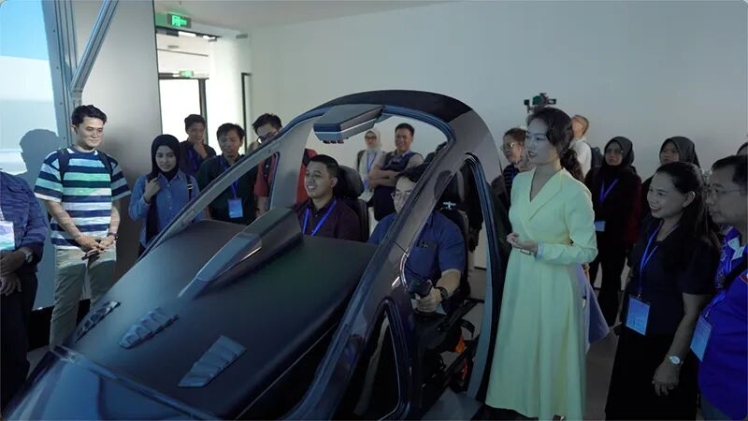
Scenes from the on-site visit [Photo by Langtao Liu]
At the ShuDao Investment Group’s culture exhibition hall, precious artifacts, vivid photographs, and interactive real-life simulations provided trainees with a comprehensive display of the group's development journey from its inception to its rise, showcasing the historic leap from ‘impassable Shudao roads’ to ‘accessible Shudao roads’ and then to ‘smooth Shudao roads.’ Impressed by China's extraordinary achievements in transportation construction across complex terrains, the trainees frequently paused in front of models of mega-projects.
The visit to the Tongwei Photovoltaics’ Science and Technology Museum focused on green energy transformation. The museum's exhibition themes, such as ‘Born to the Sun’ and ‘Zero Carbon with Light,’ presented the entire industrial chain from high-purity crystalline silicon to integrated ‘fishing-solar’ models. In the interactive experience area, the innovative model of ‘power generation on water, fish farming beneath’ sparked lively discussions. Kenyan trainee Judith Karambu M'Muruthanla observed the tranquility and cleanliness of Chengdu's streets and marveled at China's technological strength in clean energy applications.
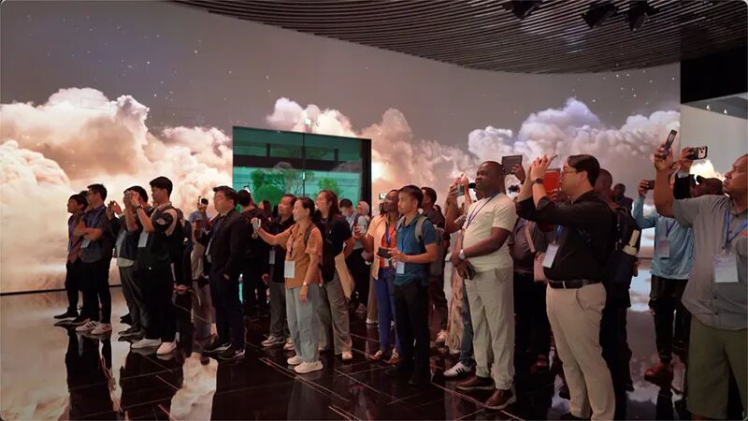
Scenes from the on-site visit [Photo by Langtao Liu]
The trainees then visited Zhanqi Village in Pidu District, Chengdu, where tidy village roads, well-arranged residences, and a rich cultural atmosphere left a deep impression. The most striking feature was the unmanned stores—no cashier, only QR payment codes, with customers picking up goods and making payments on their own. This trust-based mode of trade allowed the faraway guests to experience the warmth of rural governance. The trainees also visited the Village Eighteen Workshops, where they learned about the inheritance and innovation of traditional crafts at the Pixian Douban (fermented broad bean paste) Museum and Tangchang Cloth Shoe Workshop.
At the Chengdu Research Base of Giant Panda Breeding, the adorable giant pandas became the most popular stars in the trainees' cameras. The downgrade of its protection status from Endangered to Vulnerable serves as a vivid testament to China's decades of dedication to ecological protection.
The highlight of the afternoon was in Dujiangyan. This damless water diversion project, first built in 256 BC by Li Bing and his son leading the local people, is the oldest existing water conservancy project in the world and continues to irrigate millions of acres of farmland today. At the headworks hub, the guide explained the water diversion and sand discharge principles of the Fish Mouth, Flying Sand Weir, and Bottleneck Channel. This Eastern wisdom of ‘harnessing natural forces and adapting to circumstances’ makes Dujiangyan a model of harmonious coexistence between humans and nature from ancient times.
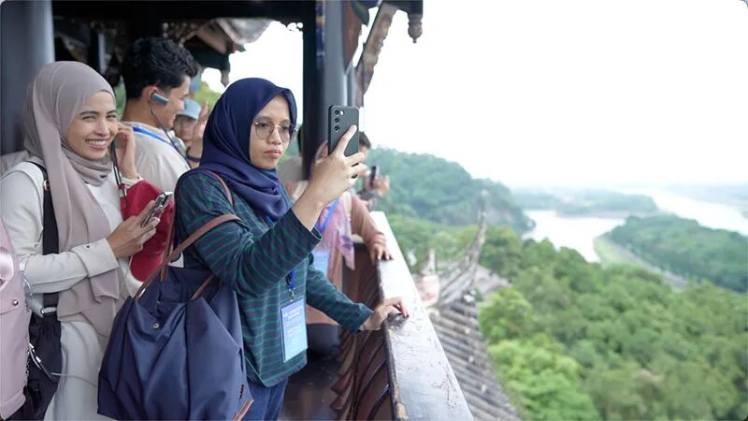
Scenes from the on-site visit [Photo by Langtao Liu]
Subsequently, an immersive cultural experience unfolded. To the sound of melodious folk music, a tea artist wielded a long-spouted copper kettle, performing the vigorous yet graceful moves of ‘Dragon Emerging from the Sea’ and ‘White Dragon Crossing the River’ to pour boiling water precisely into tea bowls. This is the ‘Eighteen Moves of the Dragon’ long-spouted kettle tea art, originating from Mount Mengding and listed in the Sichuan Provincial Intangible Cultural Heritage Registry. The exquisite skill drew rounds of applause, with some trainees trying it themselves under the tea artist's guidance.
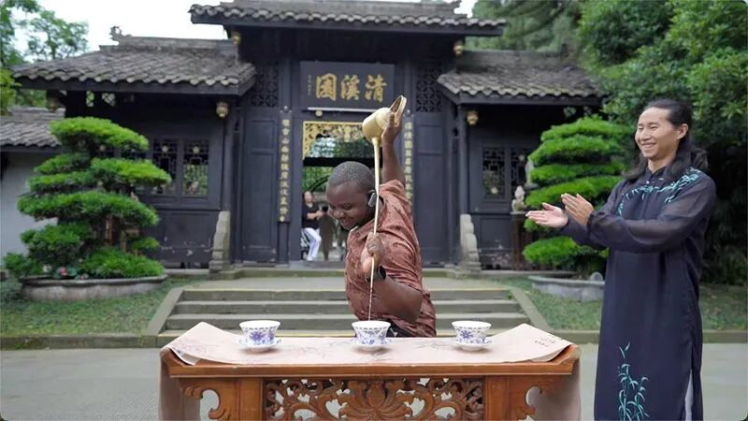
Trainees are trying tea art [Photo by Langtao Liu]
Before the tea fragrance faded, we started our Tai Chi session. Under the guidance of a Tai chi instructor, all trainees practiced Tai Chi together. The trainees raised their hands and began the movements; though they were unfamiliar with the Tai Chi moves, their expressions were especially focused. Emmanuel Andrew Akwo Ajeri, a South Sudanese trainee who had previously learned Tai Chi, shared after the activity, "Although I haven't practiced it for a long time due to work, I have never forgotten Tai Chi. It is very powerful and truly amazing."
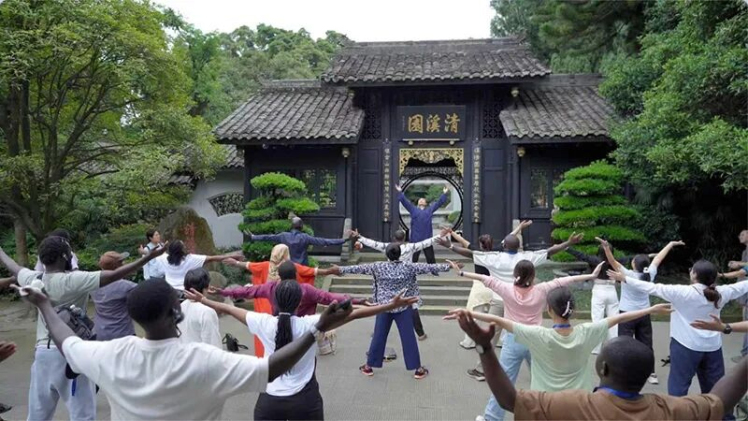
Trainees are practicing Tai Chi [Photo by Langtao Liu]
Over three days, from modern technology to ancient wisdom, from fields to cultural halls, trainees from Africa and ASEAN followed a multidimensional and colorful path of discovery in Chengdu. As South Sudanese trainee Robert Bida Charles Wani remarked, Chengdu is a beautiful and vibrant city. Everything here deeply moved him, made him feel warm, and brought him great rewards. These simple words are the most genuine echo of people-to-people exchanges across mountains and seas.
On May 28th, the trainees visited Mianyang, the China Science and Technology City, touring the Jiuzhou Group’s Innovation Exhibition Center, Changhong Intelligent Manufacturing’s Industrial Park, and the Sichuan Embodied Intelligence Robot Training Base. They experienced firsthand the pulse of China's digital economy and intelligent manufacturing, deepening technical exchanges and mutual learning in development experiences through on-site observation.
At the Jiuzhou Group’s Innovation Exhibition Center, the trainees systematically learned about the company's technological development and industrial layout in fields such as aerospace information and digital economy, forming an initial intuitive understanding of Mianyang's profound technological heritage.
Subsequently, the trainees entered Changhong Intelligent Manufacturing Industrial Park, where highly automated production lines featured precise robotic coordination, intelligent logistics systems shuttled efficiently, and the entire process from component feeding to finished product inspection was managed through a closed-loop digital control system. The trainees frequently paused to observe, inquiring in detail about production processes and technological innovations. Several trainees even asked Changhong staff about the ways of purchasing and possibility of global delivery for intelligent TV products, frankly saying, "We want to bring such 'Made in Mianyang' products home."
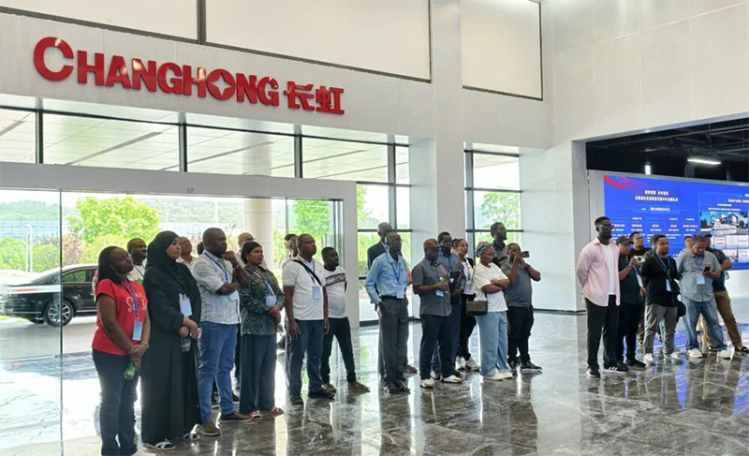
Scenes from the on-site visit
"Many industries in Africa are still at the manual operation stage, lacking deep integration of artificial intelligence and production processes," said Tanzanian trainee John Charles Ismail. He noted that the visit provided him with an intuitive comparison between Africa's industrial practices and China's advanced manufacturing. China's mature intelligent manufacturing solutions offer a clear reference for Africa's industrialization and digital transformation, and he expressed hope that Chinese enterprises would invest and operate in Africa.
At Sichuan Embodied Intelligence Robot Training Base, dynamic demonstrations of various humanoid and service robots across multiple scenarios became the focal point. This training bae, led by local Mianyang enterprise Changhong Electric, is currently the largest and most comprehensive embodied intelligence robot training base in Sichuan Province, providing full-dimensional testing and training for robots in navigation, object grasping, human-machine interaction, and more.
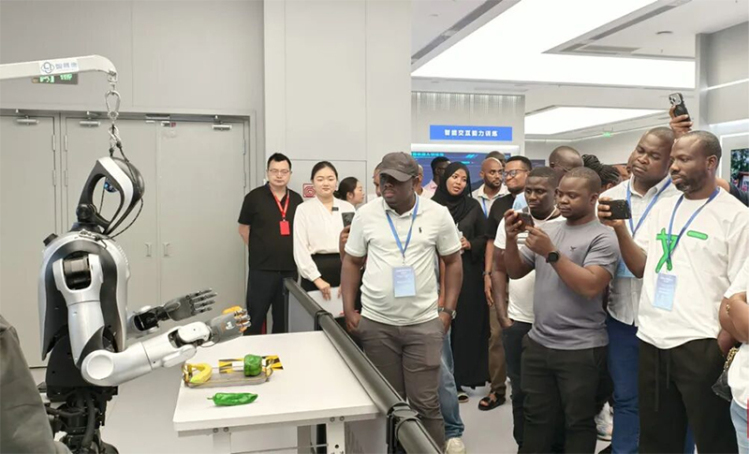
Scenes from the on-site visit
"What surprises me most is that Changhong's technology serves not only industrial production and public sectors but is also deeply integrated into the daily lives of ordinary people," said trainee Pavarate Phaesaengchan, listing Changhong's intelligent TVs, air conditioners, and other products seen in supermarkets and enterprises in Thailand. He noted that this on-site visit deepened his appreciation for the human-centered warmth of Chinese technology.
This visit built a bridge for exchanges and cooperation in the digital field between African and ASEAN countries and China. Through immersive observation and in-depth interaction, the trainees not only intuitively felt the innovative vitality and industrial strength of Mianyang, China's Science and Technology City, but also further enhanced mutual understanding and trust, laying a solid foundation for future practical cooperation in cybersecurity, the digital economy, intelligent manufacturing, and other fields.
From May 29th to 30th, the trainees visited Guangyuan city, touring Cuiyun Corridor, the Jianmen Pass Scenic Area, the Great Shu Roads Three Kingdoms Night City, and Qianfo Cliff (Thousand-Buddha Cliff), where they experienced firsthand the effects of digital and smart conservation measures.
On May 29th, at the Cuiyun Gallery Scenic Area, the trainees walked along the Bird Song Forest, Hanyang Post Station, Song Dynasty Cypress, Zhangfei Cypress, Jiange Cypress, Shuaida Cypress, Zhangfei Ancient Well, Poetry Gallery, and Cloud Pavilion, immersing themselves in the fusion of ancient Shu Roads ecology and historical culture.
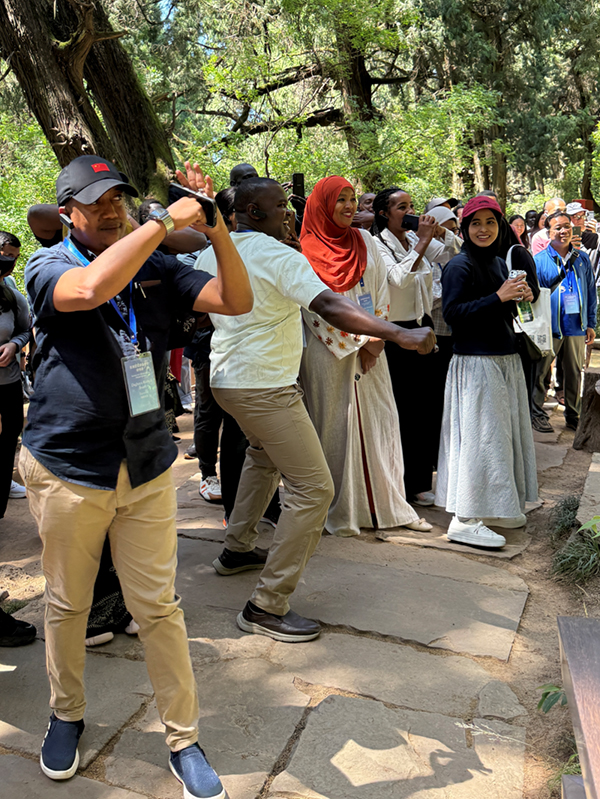
Scenes from the on-site visit
"So beautiful!" exclaimed Ethiopian trainee MULUWORK ALEMU AKUZ. "The thousand-year-old cypresses here have such varied postures. Each tree displays nature's extraordinary craftsmanship through its unique form."
Afterward, the seminar group visited the Jianmen Pass Scenic Area to explore the culture of the ancient Shu Road passes and the Three Kingdoms period. At the gate tower area, the immersive situational performance Opening the Gate for Blessings allowed trainees to more intuitively experience the patriotism and ritual culture inherent in traditional Chinese culture.
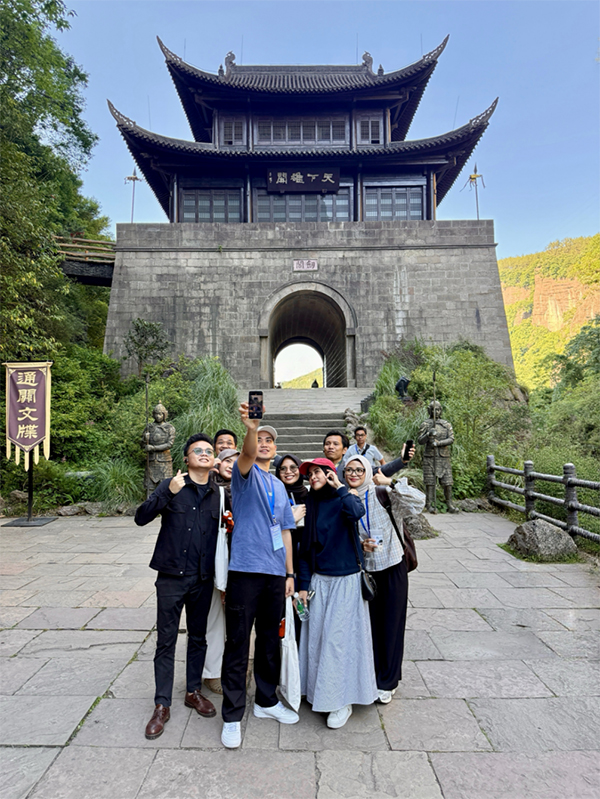
Scenes from the on-site visit
That evening, at the Great Shu Roads Three Kingdoms Night City, the trainees watched a special performance, Three Kingdoms 'Eyes' Interpretation, experiencing the innovative achievements of blending traditional cultural IP with nighttime cultural tourism. Indonesian trainee Nias Meilia shared after the performance, "I really enjoy this way of integrating traditional culture with modern technology; it never feels dull or tedious. I highly recommend that everyone come and see it."
On May 30th, the trainees visited Qianfo Cliff (Thousand-Buddha Cliff), observing the cliffside carvings up close and appreciating the achievements in cultural relic protection.
1、“国际在线”由中国国际广播电台主办。经中国国际广播电台授权,国广国际在线网络(北京)有限公司独家负责“国际在线”网站的市场经营。
2、凡本网注明“来源:国际在线”的所有信息内容,未经书面授权,任何单位及个人不得转载、摘编、复制或利用其他方式使用。
3、“国际在线”自有版权信息(包括但不限于“国际在线专稿”、“国际在线消息”、“国际在线XX消息”“国际在线报道”“国际在线XX报道”等信息内容,但明确标注为第三方版权的内容除外)均由国广国际在线网络(北京)有限公司统一管理和销售。
已取得国广国际在线网络(北京)有限公司使用授权的被授权人,应严格在授权范围内使用,不得超范围使用,使用时应注明“来源:国际在线”。违反上述声明者,本网将追究其相关法律责任。
任何未与国广国际在线网络(北京)有限公司签订相关协议或未取得授权书的公司、媒体、网站和个人均无权销售、使用“国际在线”网站的自有版权信息产品。否则,国广国际在线网络(北京)有限公司将采取法律手段维护合法权益,因此产生的损失及为此所花费的全部费用(包括但不限于律师费、诉讼费、差旅费、公证费等)全部由侵权方承担。
4、凡本网注明“来源:XXX(非国际在线)”的作品,均转载自其它媒体,转载目的在于传递更多信息,丰富网络文化,此类稿件并不代表本网赞同其观点和对其真实性负责。
5、如因作品内容、版权和其他问题需要与本网联系的,请在该事由发生之日起30日内进行。